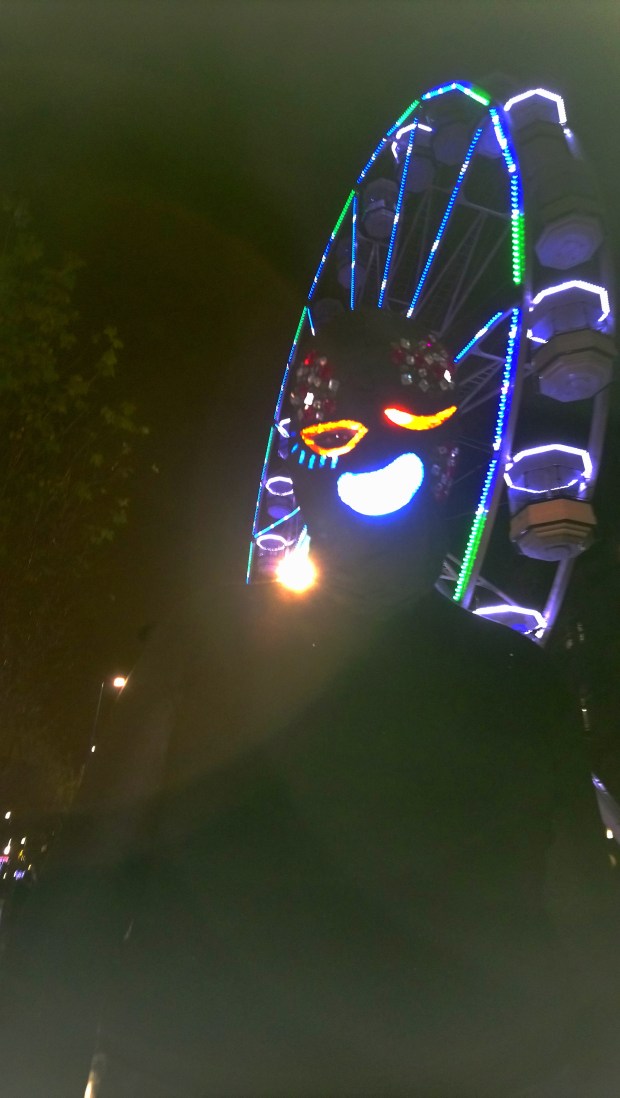
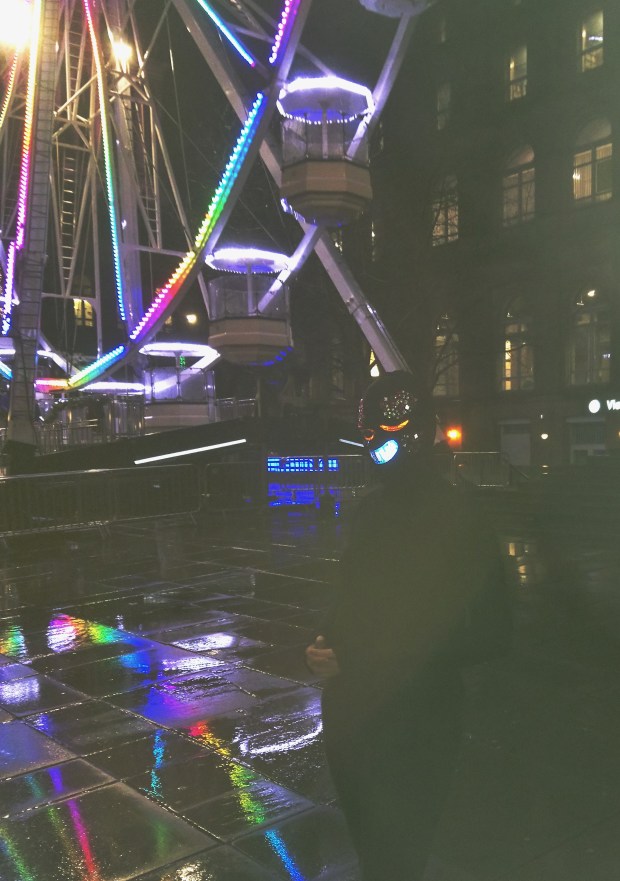
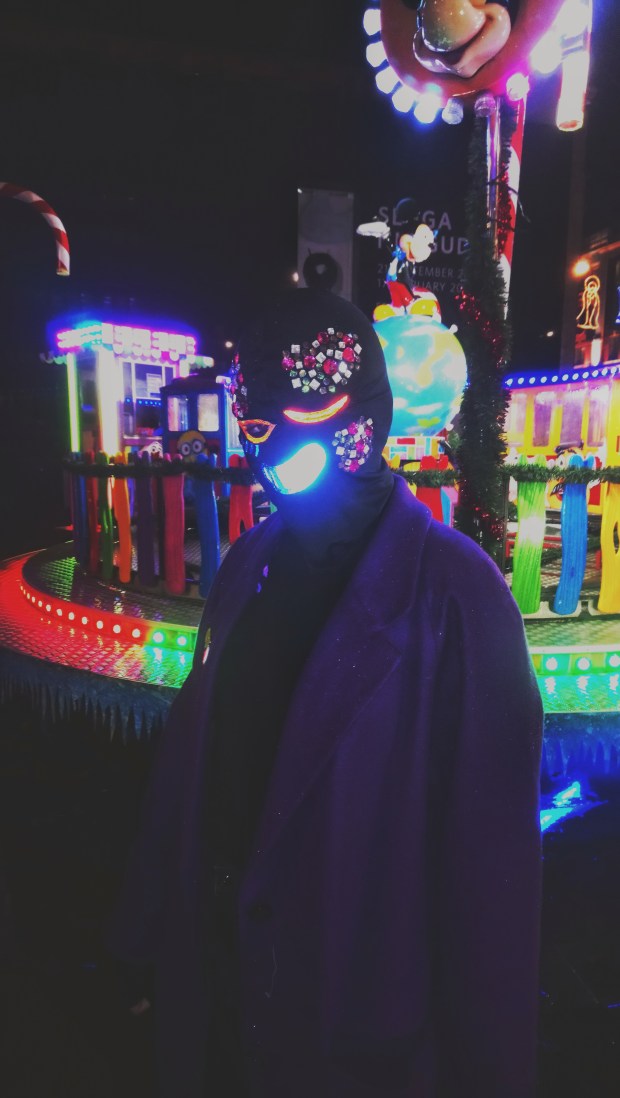
FINAL IMAGES

dsc_0191-01dsc_0193-01dsc_0200-01-01

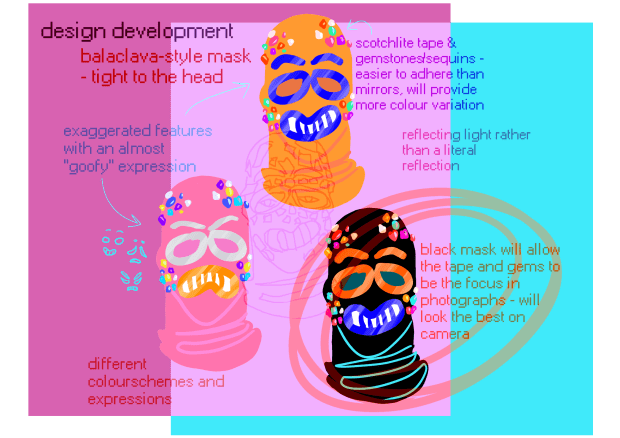
I chose to photograph at night to allow for the black mask to blend in with the background, allowing the embellishments to be the focus. It also meant that photographing with the flash would allow for the best results. I chose to photograph during the Winter market as I felt the colours of the lights would work well as a backdrop for my images.

MASK MANUFACTURE

Starting with a plain black balaclava, I used a craft knife to cut scotchlite/reflective tape into the desired shapes and adhered it to the mask using adhesive tape and steam (and by sewing it where needed).

I sewed one eyehole closed in order to get the desired expression, and partially sewed the other to help make the eyehole smaller. Gemstones and sequins were applied in clusters, using the same method used to adhere the tape.

MOODBOARDS

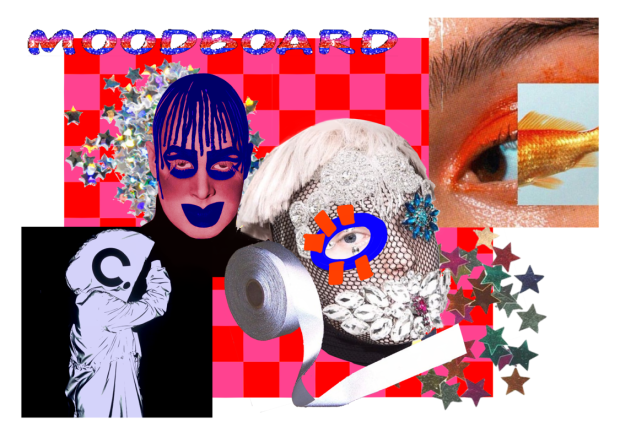
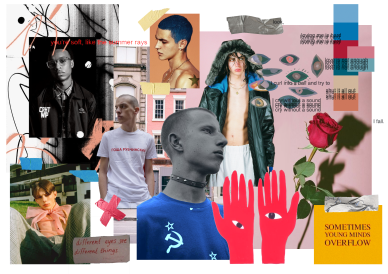
moodboard

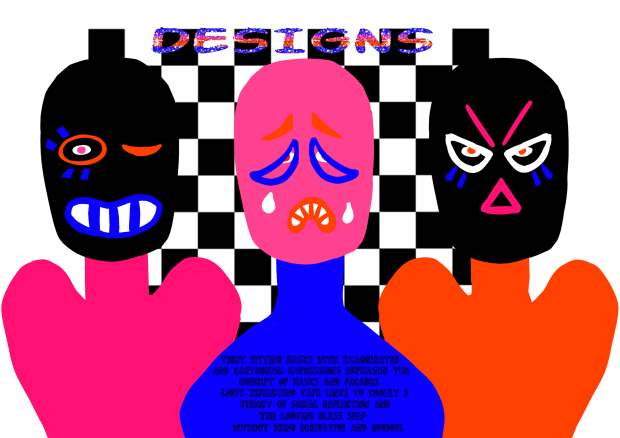
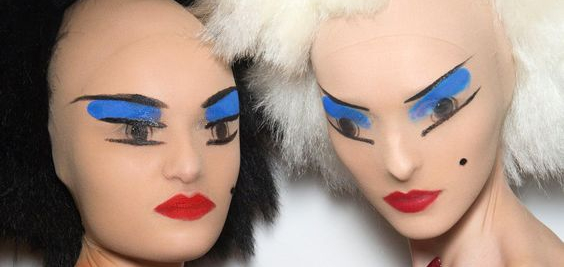
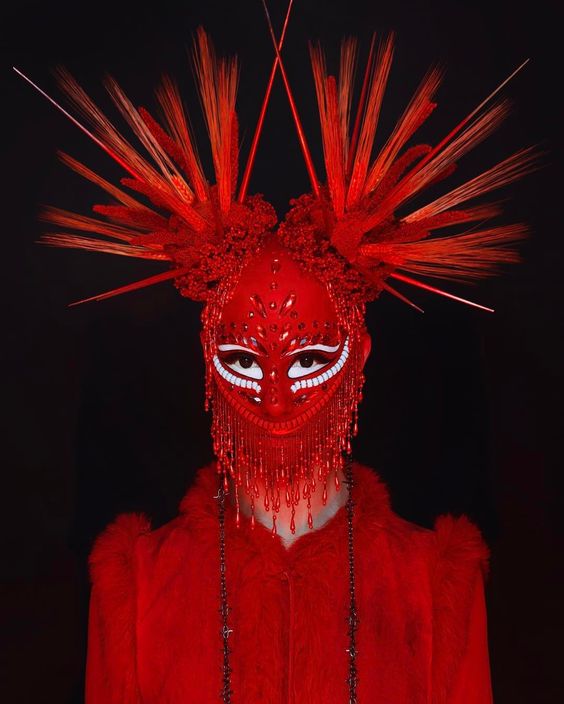
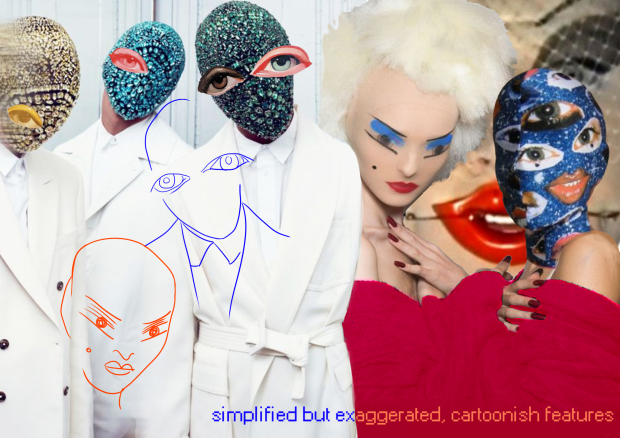
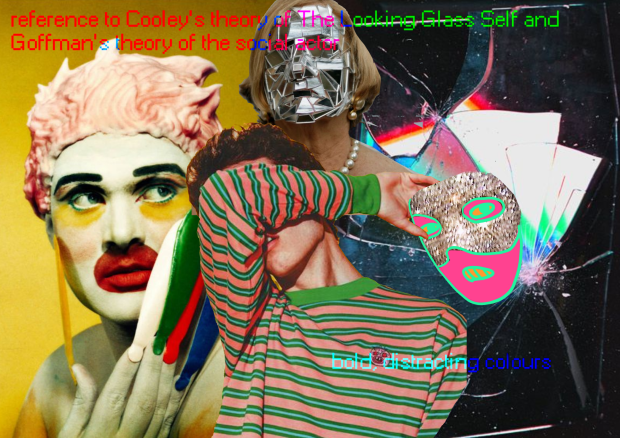
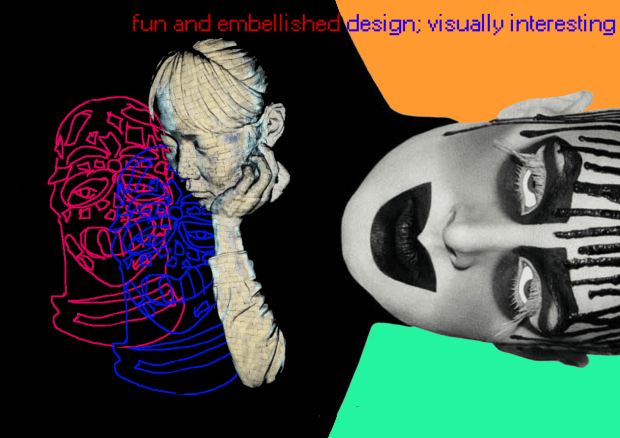
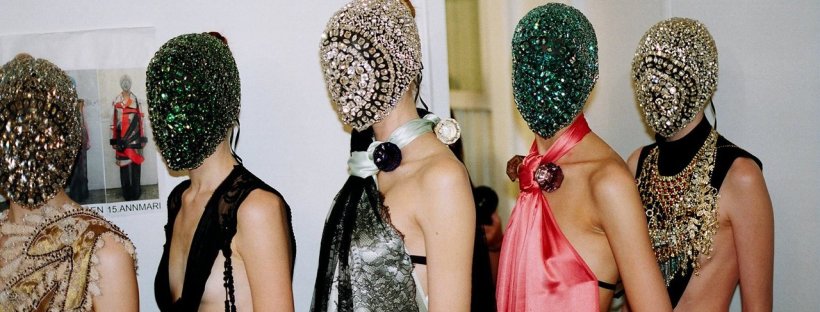
Visual inspiration for my mask designs comes from cartoonish and exaggerated expressions; Leigh Bowery’s makeup looks exemplify this, in addition to Japanese Kabuki makeup (mentioned in previous posts). Reflective tape, as well as light-catching sequins and jewels (ala Martin Margiela and the fishnet mask used in the moodboard) provide a link between Cooley’s concept of social reflection – “The Looking-Glass Self” – without being derivative and using mirrors.

designs

Accessory inspiration; masks


This COP project is centred around creating an accessory; I have chosen to create a mask themed around my concept of identity – specifically, postmodern theories of identity, such as Goffman’s social actor theory, and the theory that our self-perception and identity is a direct reflection of how people respond to us. As such, much of my visual inspiration will be coming from masks, theatrical makeup and styling, and mirrors.

This post is very image-heavy; read the full article to view.

Continue reading

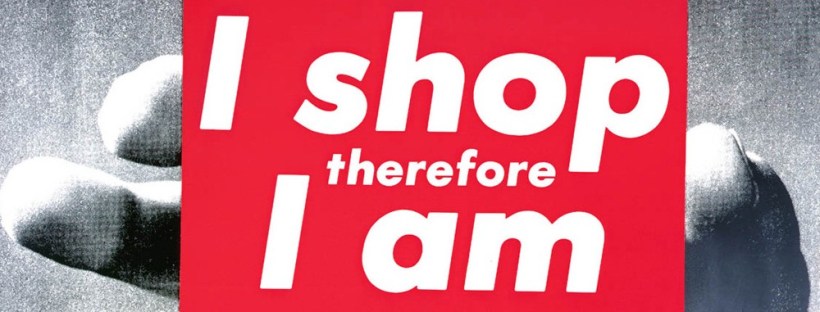
Need vs want; consumerism and identity

Speaking of the mid-1960s, around the same time as the launch of his homeware and furniture store, Habitat, Terence Conran (quoted by Whiteley N. in his 1993 book, Design For Society) said:

“There was a strange moment around the mid-60s when people stopped needing and need changed to want….Designers became more important in producing “want” products rather than “need” products, because you have to create desire.”

Obviously, this was a comment on the shift of society towards mass-manufactured consumerism in a post-war society – food rationing in the UK didn’t end until 1954, almost a decade after the end of WWII and 14 years after rationing was first imposed, and by the time the 1960s arrived, consumer items were shifting rapidly towards the ephemeral and replaceable (paper dresses, anyone?), becoming more indicative of today’s era of late-Capitalist society. Introducing items that catered to trendy, short-lived fads was a good idea to strengthen a post-War economy, and as identity became increasingly more diverse with the inception of youth culture, products that seemed desirable were an easy-sell to a society that increasingly sought out status symbols, a social trend that is still reflected in modern society. Continue reading

Outsiders and Artisans

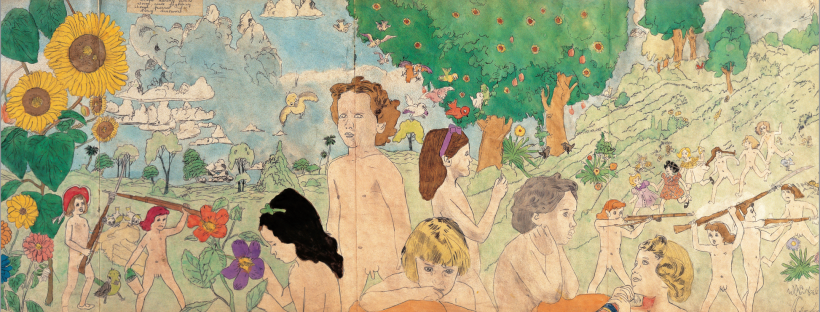
The first time I considered – like, legitimately considered – outsider art as a, well, art form, I was regrettably much older than I should have been. I was 16 and hosting a sleepover when my friend asked me if I’d heard of Henry Darger.

I hadn’t.

She went on to tell me that she’d recently read a Cracked article that had piqued her interest in his work; his work being an obsessive 15-volume,15000+ word, illustrated novel – with over 300 collaged and watercoloured illustration, some of which span up to 10ft in length – that he had written during his tenure as a janitor at a Chicago hospital. Continue reading

👽 // hello! // 👽

zinestyle

This is essentially going to be my introductory post for this blog!

Its purpose is to document my context of practice 2 (aka COP2) work for the first semester of my level 5 fashion course. My – tentative – theme is going to be “the aesthetics of identity”; how identity politics can manifest in our day to day attire. (This is, of course, subject to change as I continue with the project LOL) Continue reading