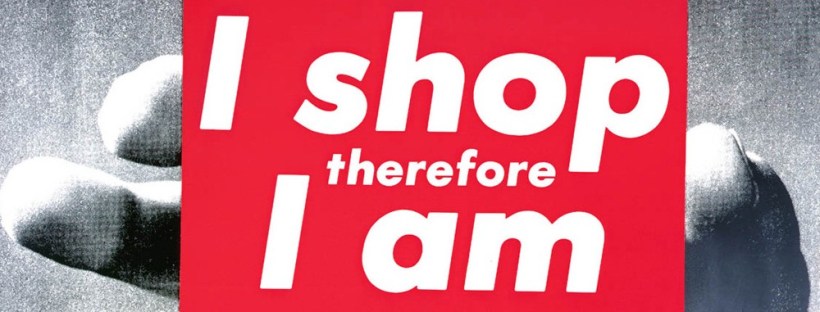
Speaking of the mid-1960s, around the same time as the launch of his homeware and furniture store, Habitat, Terence Conran (quoted by Whiteley N. in his 1993 book, Design For Society) said:
“There was a strange moment around the mid-60s when people stopped needing and need changed to want….Designers became more important in producing “want” products rather than “need” products, because you have to create desire.”
Obviously, this was a comment on the shift of society towards mass-manufactured consumerism in a post-war society – food rationing in the UK didn’t end until 1954, almost a decade after the end of WWII and 14 years after rationing was first imposed, and by the time the 1960s arrived, consumer items were shifting rapidly towards the ephemeral and replaceable (paper dresses, anyone?), becoming more indicative of today’s era of late-Capitalist society. Introducing items that catered to trendy, short-lived fads was a good idea to strengthen a post-War economy, and as identity became increasingly more diverse with the inception of youth culture, products that seemed desirable were an easy-sell to a society that increasingly sought out status symbols, a social trend that is still reflected in modern society. Continue reading
 sepulchre.fashion